

Education Powered By Love
Our 2030 Strategic Plan is KIPP Atlanta Schools’ commitment to ensure every scholar has access to an excellent education and a future filled with possibility. Shaped by more than 6,000 conversations with our Team & Family, it charts our course for the next four years.
Guided by KIPP Atlanta’s mission, vision, and values, we reflected on where our scholars and schools stand today and where we aspire to be in the years ahead. We engaged a broad cross-section of our community, including school leaders, teachers, non-instructional staff, families, scholars, alumni, and Board members. This level of engagement ensured authentic reflection of the voices and lived experiences of those we serve. From August 2025 to April 2026, we made over 6,000 touchpoints with stakeholders through in-person sessions and surveys.
Flip through the KIPP Atlanta Schools 2030 Strategic Plan
KIPP-ATL-Strategic-Plan-2030-1
Our Two Big Bets
Double the percent of scholars proficient or distinguished in English-Language Arts.
50% 2030 target — up from 25% today

Double the percent of high school graduates earning a degree within six years.
64% 2030 target — up from 32% today

Our launch year focuses on five priority areas: Academic Core, Scholar Experience, Postsecondary Readiness, Talent, and Organizational Sustainability — strengthening the foundation while preparing to expand in Years 2–4.
Our Strategic Big Bets
Below, find our commitments and each of their key initiatives. Click an initiative to see the strategies behind it.
We will ensure all scholars experience high-quality instruction, strong learning habits, and supportive school cultures that prepare them for success at every stage of their K–16 journey and beyond.
Design and deliver a cohesive K–16 experience that builds the knowledge, skills, and mindsets every scholar needs to thrive.
Strengthen grade-level and advanced instruction, improve differentiation, and ensure scholars get the challenge and support they need.
Strengthen ACT prep, advising, career exposure, dual enrollment, and clear high school pathways aligned to scholars’ goals.
Establish clear, developmentally appropriate expectations and systems that promote positive culture and academic readiness.
We will recruit, develop, and retain mission-driven, highly effective educators and leaders; invest in leadership pipelines and professional growth; and create the conditions for adults to thrive and grow over time.
Create a clear, shared definition of excellent teaching and leadership, and use it to align hiring, coaching, and succession planning.
Establish differentiated learning experiences that meet educators where they are and equip them for high-quality instruction.
Align leadership development to our academic vision and ensure continuity for critical school- and network-level roles.
We will deepen relationships by building strong family–school partnerships, fostering meaningful alumni engagement, and cultivating purposeful community relationships that support scholars and families over time.
Establish shared commitments and give families the support, communication, and tools to actively partner in scholar success.
Create intentional opportunities for alumni to stay connected and contribute to the success of current and future scholars.
Build purposeful partnerships that expand access to resources, opportunities, and supports for scholars and families.
We will continue building an organization that is effective, adaptive, and innovative — strengthening core systems, improving efficiency, and responsibly leveraging innovation to support attendance, financial sustainability, and consistent execution.
Responsibly leverage innovation to improve efficiency, clarity, and access to information across the organization.
Strengthen attendance systems, identify barriers earlier, and partner with families to keep scholars present and engaged.
Align enrollment, staffing, and scheduling to maximize resources in service of scholar learning.
Where we’re starting
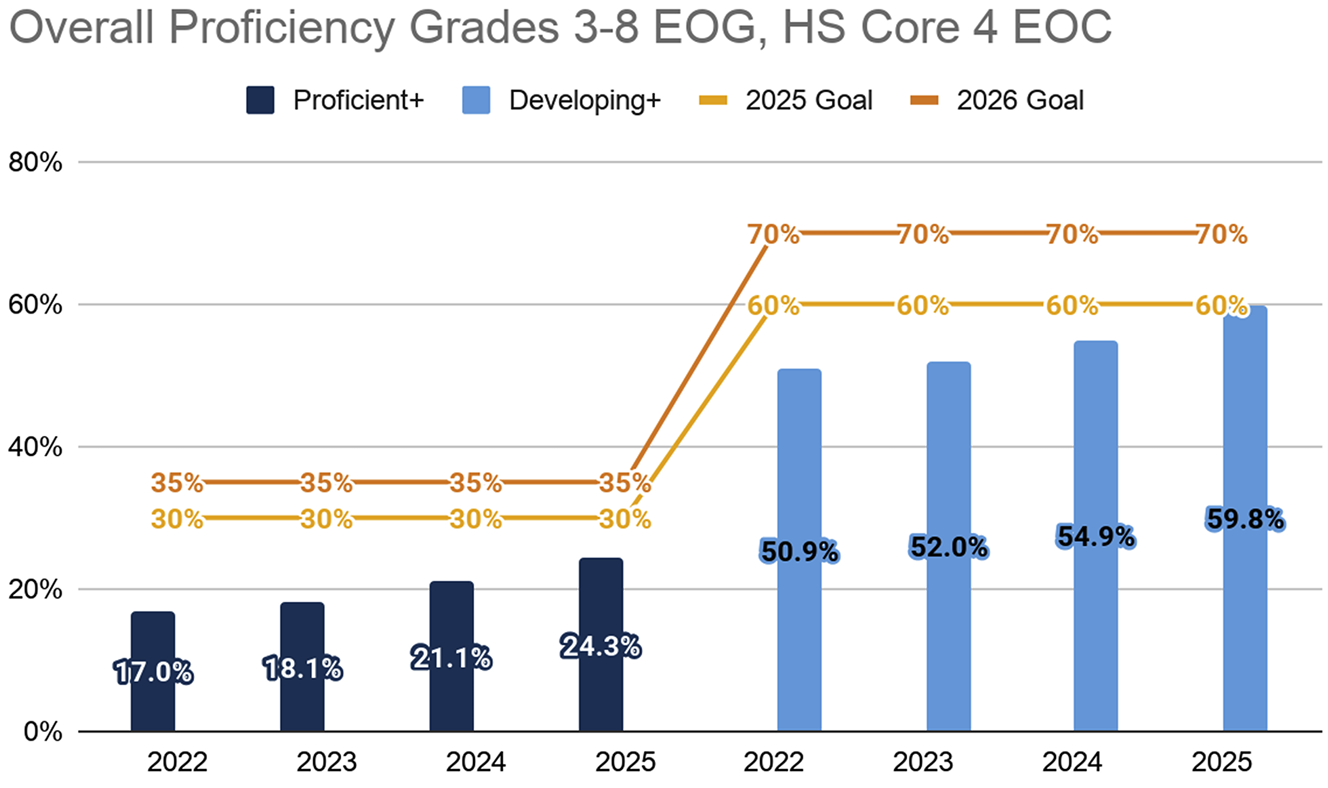
Overall proficiency across grades 3–8 and high school core courses has risen four years running — the foundation our 2030 goal builds on.
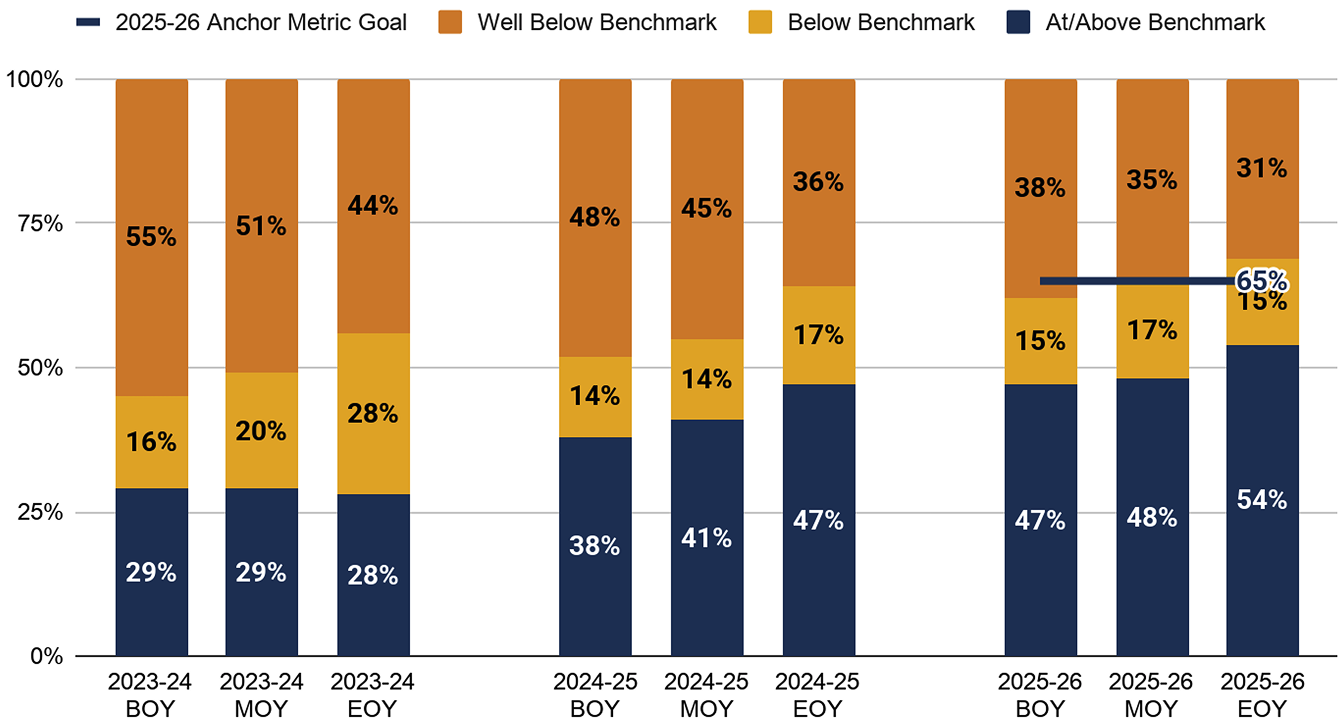
mCLASS DIBELS
Over the last 3 years of using mCLASS DIBELS, we have seen varied performance in moving scholars to the At/Above Benchmark category, but have seen a steady decrease in those scholars in Well Below Benchmark over each of these years. Our One KIPP anchor metric goal for 2025-26 is 65% and our MOY data sits at 48%.
Grades 3-8, HS Core Four
Scholar proficiency levels are trending positively, with consistent growth across both Proficient+ and Developing+ over time. Even with this progress, we still have meaningful ground to cover to meet our 2026 goals.
K-12 Based on Screener
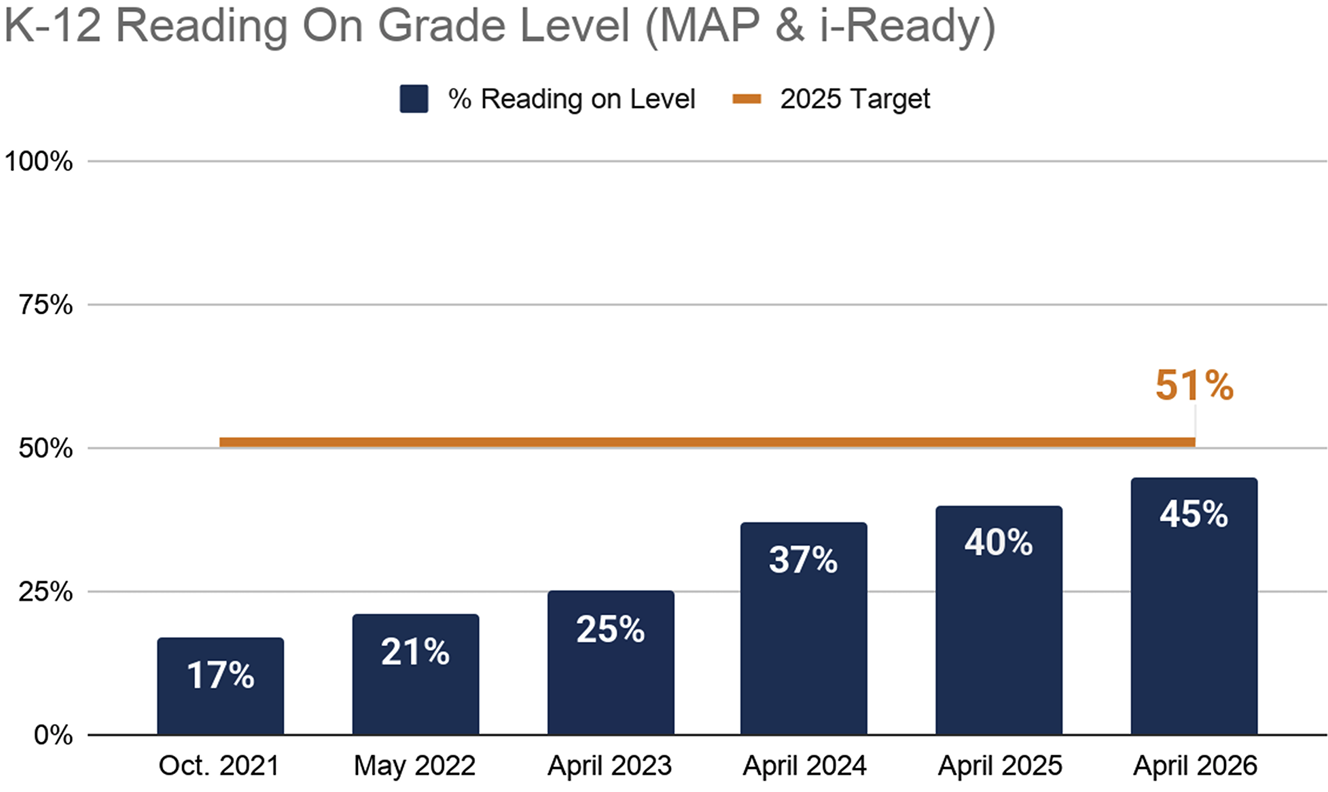
During our 2025 Strategic Plan, we set out to triple the scholars reading on grade level from 17% to 51% by 2025. While we made more than doubledigit gains, we fell short of our 51% goal by 11 percentage points.
Let’s get to work.
Get the complete plan — including every strategy, phasing timeline, and measure of success — as a downloadable PDF.